Are car salary sacrifice schemes worth it? Everything employees need to know

Getting a new car can feel expensive before you’ve even started the engine. What with the deposit, insurance, servicing, tyres, road tax, the costs start piling on. That’s why more employees are taking a closer look at green car salary sacrifice schemes.
A car salary sacrifice scheme gives you another route into a brand-new electric or hybrid car through your employer. For a lot of people, the attraction is simple:
- One fixed monthly cost
- Fewer extra bills
- A lower tax hit
And a much easier way to move into an electric car without paying a large chunk upfront. That matters because cars still play a big role in working life. In Great Britain, the average commute includes 26 minutes by car, and in England 66% of workers usually commute by car.
This guide breaks down what a green car scheme is, why it’s a workplace benefit, what’s included, where the savings come from, and how to work out whether it’s worth it for you. It also shows why BHN Extras, the UK’s leader in employee benefits, gives employees a simpler way to access benefits that genuinely help with everyday costs.
What is a car salary sacrifice scheme?
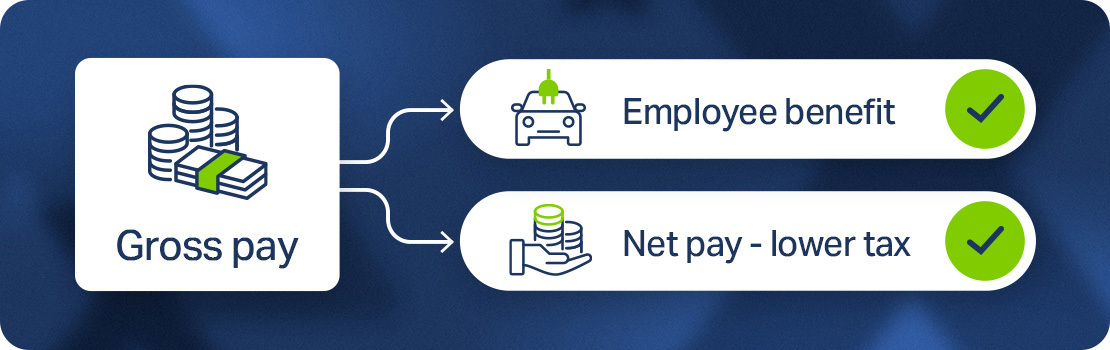
A car salary sacrifice scheme lets you exchange part of your gross salary for the use of a car through your employer. Because the deduction comes out before Income Tax and National Insurance are worked out, it can lower the amount of tax and NI you pay.
With a green car salary sacrifice scheme, the car is usually electric or ultra low emission. That matters because company car tax, known as Benefit in Kind or BiK, is much lower on zero-emission cars than on many petrol and diesel models. HMRC’s 2025 to 2026 company car percentage table shows zero-emission cars at 3%, while higher-emission cars sit much higher up the scale.
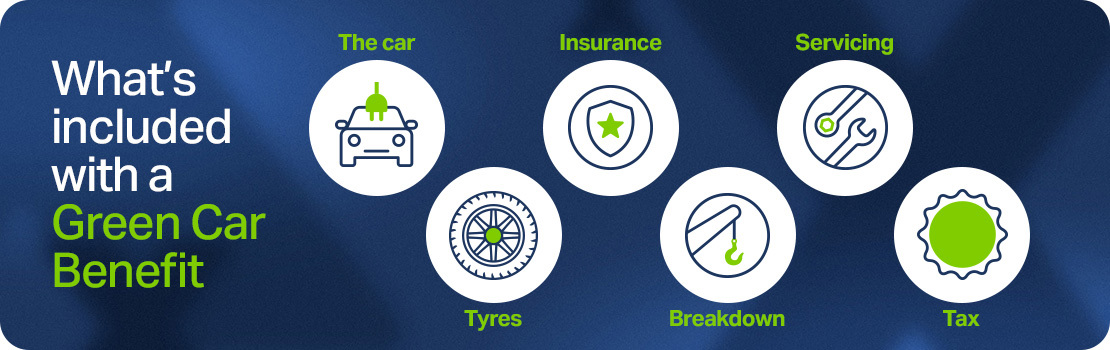
In real life, that means you’re not simply paying for access to a car. You’re getting a work benefit that can wrap several driving costs into one monthly amount taken through payroll. With Green Car Benefit, for example, that package can include the car, insurance, servicing, maintenance, breakdown cover, road tax, MOT and replacement tyres.
Are salary sacrifice car schemes worth it?
Salary sacrifice car schemes are perfect for employees who like the idea of fixed monthly costs, and would rather avoid a deposit, separate insurance shopping, and the sting of unexpected repair bills. The value usually comes from three places.
- First, you may save on Income Tax and National Insurance because the payment comes from gross salary
- Second, electric cars attract lower BiK tax than many people expect
- Third, the package often includes costs you would normally pay separately
This makes the total monthly picture look far better than comparing the salary deduction on its own. If you’re comparing it with leasing or financing a new car privately, a salary sacrifice car scheme is a very strong option.
How does car salary sacrifice work?
The process is usually straightforward. Your employer signs up to the scheme. You browse available cars and get a quote. You choose the make, model and specification you want. Your employer approves the request. Payroll updates your gross salary. Then the car gets delivered.
That’s the part employees like. It feels simple. Behind the scenes, the provider handles the heavy lifting. With BHN Extras, the admin, support and scheme management are built in, so you’re not left dealing with lots of separate suppliers or policies.
From your point of view, the key thing is this: one monthly deduction comes from salary, and in return you get a fully managed car package.
What’s included in a green car salary sacrifice scheme?
This is where the benefit starts to look much bigger than a basic lease.
Green Car Benefit includes the car, comprehensive insurance, servicing, maintenance, road tax, MOT, replacement tyres and breakdown cover. That takes a long list of car costs and folds them into one monthly figure. The package is designed as a total car solution, with no deposit, no depreciation risk for the employee, and major running costs bundled in.
That matters for budgeting. You know what the car is likely to cost you each month. You are far less exposed to the usual ‘something’s gone wrong’ bill that hits at the wrong time. And because the car is electric or hybrid, your day-to-day running costs may be lower too, depending on how and where you charge.
Where do the savings come from?
Savings usually come from a mix of tax efficiency, lower running costs, and the fact that the scheme bundles together things that would otherwise sit on top of your car payment.
The first saving comes from salary sacrifice itself. Because the monthly amount comes from gross pay, you may pay less Income Tax and National Insurance than you would if you paid for a car from net salary.
The second saving can come from the car you choose. Zero-emission vehicles still have favourable BiK treatment. HM Treasury confirmed that the appropriate percentage for zero-emission company cars will rise gradually to 9% by 2029 to 2030, which leaves EVs in a much stronger tax position than many higher-emission cars.
The third saving is practical, not just tax-based. In 2025, electric cars moved into standard vehicle tax rules, so there is now road tax to think about on EVs too. In a salary sacrifice package, that cost is usually already wrapped in.
What could you save each month?
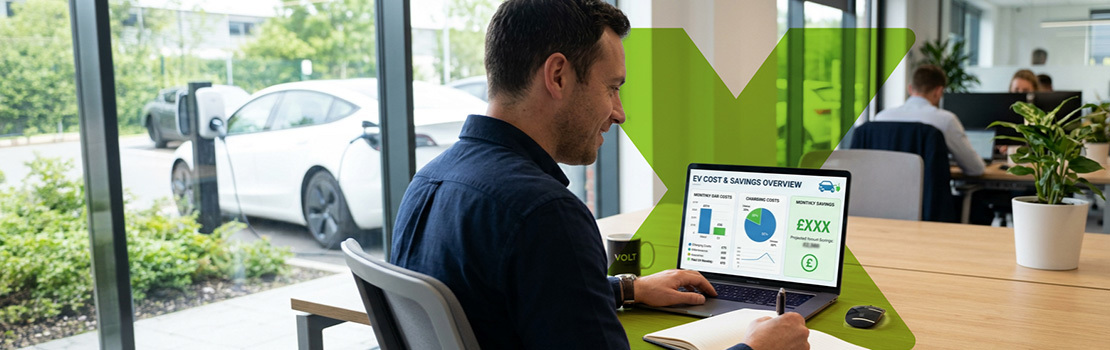
There is no one-size-fits-all answer, because your monthly saving depends on your salary, tax band, car choice, and what you currently spend to run a car.
The smart way to compare a salary sacrifice quote is to line it up against your real monthly motoring costs now. That means finance or lease payments, insurance, servicing, tyres, MOT, road tax and fuel. If you are moving into an EV, charging costs are between 16 pence and 23 pence per mile for an average-efficiency EV.
For some employees, the biggest monthly win is not a dramatic headline saving. It is cost control. You swap several variable bills for one predictable figure. For others, the tax and NI position makes the difference much more noticeable.
Why choose car salary sacrifice scheme
Employees choose a car salary sacrifice scheme because it makes driving a newer, greener car feel more manageable.
You get fixed monthly costs. You get fewer surprise bills. You can often get started without a deposit. You get access to electric or hybrid cars that might feel out of reach through regular personal finance. You may cut your tax and NI bill. And you get a package that does a lot of the boring stuff for you.
There’s also a wider shift behind it. Public EV charging keeps growing, government policy still favours low-emission company cars, and more employees want benefits that help with real life, not vague promises.
For employees who want a greener car without making life more complicated, Green Car Benefit has real appeal.
Who is a salary sacrifice car scheme best for?
It suits employees who want:
- A brand-new electric or hybrid car and like the idea of one fixed monthly cost
- To skip the usual deposit
- Insurance, maintenance and servicing handled in one place
- An affordable route into owning an EV
It may be especially attractive if you are paid through PAYE, your employer offers the scheme, and you are already considering private leasing or financing a new car. If convenience matters to you as much as the raw monthly number, the value often looks even stronger.
What should you check before signing up?
Before you go ahead, check the quote carefully. Look at the monthly salary deduction, the estimated BiK tax, what happens to take-home pay, the contract length, mileage terms, wear-and-tear rules, and what happens if your circumstances change during the agreement.
You should also think about your wider finances. Salary sacrifice can affect things linked to gross pay, so it is worth checking how it may interact with pension contributions, borrowing applications, or any salary-linked benefits through your employer.
That’s why transparency matters. A good scheme should make the numbers and the terms easy to understand before you commit.
So, are salary sacrifice car schemes worth it?
For lots of employees, yes. They can give you a more affordable way into a brand-new electric or hybrid car, turn a messy group of motoring costs into one monthly figure, and make the move to greener driving far easier to manage.
The best way to judge it is to compare the full package against what you would otherwise pay. Look at the tax position. Look at what is included. Look at how much hassle it removes from your life. Then decide what that convenience and predictability are worth to you.
If your employer offers BHN Extras, you already have access to one of the smartest and simplest ways to explore that choice: Green Car Benefit.
Car Salary Sacrifice Scheme FAQs
Are salary sacrifice car schemes worth it for higher-rate taxpayers? +
They can be especially attractive for higher-rate taxpayers because the salary comes out before Income Tax and National Insurance are calculated, which can increase your tax savings compared to basic-rate taxpayers. Your exact result still depends on the car, the quote, and your pay.
Why choose car salary sacrifice scheme if I want to protect cash flow? +
Because it can reduce the upfront strain. Many schemes remove the need for a deposit and replace several separate car costs with one regular payroll deduction, which can also reduce your National Insurance contributions, making monthly budgeting easier.
Can a salary sacrifice car scheme affect my pension? +
It can, because your contractual gross salary is reduced. If your pension is based on post-sacrifice salary rather than notional salary, contributions could change. This still applies whether you choose a petrol car or an electric vehicle, so it’s worth checking your employer’s pension rules before signing up.
Can a salary sacrifice car scheme affect mortgage applications? +
It can. Some lenders look at payslips and affordability in different ways, so it is worth asking a broker or lender how salary sacrifice is treated before you apply, especially if your agreement includes an annual mileage estimate that forms part of your contract.
Are used cars available on salary sacrifice car schemes? +
Some providers may offer them, but many employee car salary sacrifice schemes focus on new electric or hybrid vehicles because lower CO2 emissions improve the tax treatment and overall value of the package.
What happens if I leave my job during the agreement? +
Early exit terms vary by provider and employer. Some schemes include protection for events like resignation, redundancy, sickness, or parental leave, but you should always read those terms before you commit, particularly if you’ve chosen one of the latest electric vehicles with a longer agreement term.
Can I get a home charger with a salary sacrifice car scheme? +
That depends on the provider and the package. Some schemes include or offer home charging support, while others leave charging setup to you. Check what is included in your quote.
Why choose car salary sacrifice scheme if I drive low mileage? +
It can still work if you value convenience, low admin and bundled costs. But if you do very low mileage and already run a cheap car, the financial case may be less compelling than it is for a driver replacing a newer financed car.
Do salary sacrifice car schemes help if I want to drive electric before buying one outright? +
Yes. For some employees, a scheme is a lower-risk way to try EV driving without buying a car outright or taking on a conventional lease with separate running costs.
Are salary sacrifice car schemes worth it if I charge mostly in public? +
They still can be, but your running costs may be higher than someone who charges mostly at home. Compare likely charging costs with your current fuel spend so you can judge the savings properly.
You might also like these article...

How to Create a Culture of Motivation in the Workplace
Read the article
Are car salary sacrifice schemes worth it? Everything employees need to know
Read the article
What should you expect from your employer? Employee benefits explained
Read the article