Employee Wellbeing: Strategy, Advice, and Examples

Employee wellbeing affects far more than how people feel during the working day. It can influence attendance, concentration, motivation, teamwork, and whether talented employees choose to stay with your organisation. This is particularly important considering how 63% of UK employees demonstrate symptoms of stress, such as exhaustion and disengagement.
A few one-off initiatives may create a temporary lift, but it’s efficient and lasting support that prevents your employees and your business from suffering. That’s why a strong employee wellbeing strategy gives your organisation a clear, practical plan for protecting your employees’ physical and mental health while creating a healthier, more productive workplace.
What is an employee wellbeing strategy?
An employee wellbeing strategy is a long-term plan for supporting the health, happiness, and overall quality of working life of your employees. It brings together the policies, working practices, management behaviours, resources, and benefits that can affect wellbeing. This may include:
- Mental health support
- Safe working conditions
- Workload management
- Flexible working
- Financial wellbeing
- Physical activity
- Opportunities for social connection
The aim is not to remove every source of pressure from work. That’s simply not possible. Some deadlines, difficult decisions, and busy periods are unavoidable. Instead, a good employee wellbeing strategy helps prevent unnecessary harm, identifies problems early, and gives people the support they need to manage challenges.
Why is an employee wellbeing strategy important?
Poor wellbeing rarely stays contained to one employee or one part of the business. When people feel exhausted, unsupported, or physically unwell, the effects can appear in missed deadlines, lower-quality work, communication problems, and increased absence. This is reaffirmed by how, in 2025, 10% of UK adults took time off work for mental health related reasons.
An employee wellbeing strategy is important because it helps your organisation move from reacting to individual problems to preventing them where possible. This means putting a framework of support in place that helps employees stay physically and mentally well, rather than just waiting until they’re unwell and dealing with that when it happens.
Most importantly, a strategy also shows that wellbeing is not simply an annual campaign or a poster in the staff room. It is an ongoing business priority, and one that will have a real impact on how your employees show up and perform every day.

The business benefits of an employee wellbeing strategy
Supporting employees is the right thing to do. And, on top of the moral obligation to support your staff’s wellbeing, an employee wellbeing strategy can also strengthen the performance and resilience of your organisation in the following ways.
Reduced absenteeism
Physical illness, stress, and burnout can all contribute to short and long term absence. In fact, 34% of UK adults reported feeling extreme levels of stress and pressure in the workplace in 2025. While no strategy can prevent every sick day, healthier working practices can reduce avoidable causes of absence and help employees access support earlier.
This might mean reviewing workloads, improving workstation safety, encouraging proper breaks, or making professional support easier to access. Together, these things add up and help prevent your employees from overworking and becoming sick, burnt-out, and absent from work as a result.
Better productivity and focus
Poor physical and mental health costs the UK £150 billion annually. One factor at play here is that people generally work less efficiently and take more sick days when they are run down or burnt out. However, when staff feel like they are supported and have a work-life balance that works for them, they are far more likely to be more productive and focused during their working hours.
Ultimately, people work best when they have enough energy, feel psychologically safe, and are not distracted by preventable pressures. Whether it’s workload management by limiting overtime or perks such as flexible working hours and extra breaks when needed, a strong employee wellbeing strategy will help your employees feel better, focus, and work more efficiently. That’s a win for your company as well as your people.
Stronger engagement and morale
Currently, only 38% of employees feel that their employer prioritises their wellbeing. There’s much room for improvement here, as employees are more likely to feel connected to an organisation when they believe it cares about them as people. And when people feel connected to an organisation, they’re more likely to do their best work for it.
When the organisation follows through on employee feedback and actually shows a commitment to employee wellbeing, trust grows. People will then be more likely to contribute ideas, collaborate with colleagues, and take pride in their work. In short, happy and cared for employees means higher morale and stronger workplace engagement.
Improved retention and recruitment
Replacing experienced employees not only costs time and money, but it can also place extra pressure on the people who remain. This creates a domino effect, all of which can be avoided by giving sufficient attention to the wellbeing of your workforce.
A strong employee wellbeing strategy can help employees see a future with your organisation, encouraging them to stay with your business for longer. It can also strengthen hiring by showing your prospective candidates that healthy working practices are part of the culture, not simply a recruitment messaging. This makes people want to work for you.
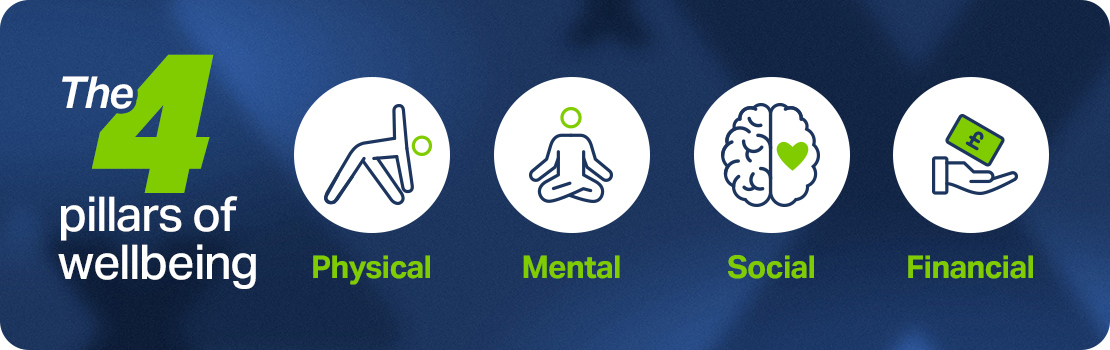
Supporting mental wellbeing in your employee wellbeing strategy
47% of UK employees think an open dialogue with their employer about mental health would improve their wellbeing at work. This shows that mental wellbeing should be a central part of your employee wellbeing strategy.
Start by looking at the working conditions that may be affecting people. Heavy workloads, unclear responsibilities, poor communication, bullying, constant interruptions, and a lack of control can all increase pressure. Offering counselling will not solve problems caused by the way work itself is organised.
Managers play an important role. Train them to recognise changes in behaviour, hold supportive conversations, and direct employees towards appropriate help. They do not need to become therapists, but they do need to listen without judgement and understand the organisation’s policies.
Practical mental wellbeing support for employees could include:
- Confidential employee assistance or counselling services
- Regular one-to-one conversations
- Mental health awareness training
- Clear processes for raising concerns
- Flexible working where roles allow
- Realistic expectations around availability
- Protected breaks and manageable workloads
- Support following bereavement, illness, or major life changes
Senior leaders should also model the same behaviours they expect from employees. If leaders send messages late at night, work through every holiday, and praise overworking, employees may feel unable to use the wellbeing support on offer.
Supporting physical wellbeing at work
When it comes to an employee wellbeing strategy, physical wellbeing for employees is not limited to gym memberships. It starts with making sure work can be carried out safely and comfortably, and reviewing the physical demands of each role. Here are a few examples:
- Office employees may need suitable desks, chairs, screens, and regular movement breaks
- Warehouse, retail, or manufacturing teams may need safe lifting training, appropriate protective equipment, and well-managed shift patterns
- Drivers and mobile workers may need realistic schedules and enough time to rest between shifts
Encouraging movement can still form part of the strategy, however. Walking meetings, active team challenges, cycle-to-work support, and discounted access to gyms can give employees more ways to fit activity into everyday life.

BHN Extras can support this area through benefits such as Cyclescheme, which helps employees save up to 47% on bikes and cycling equipment, and MyGymDiscounts, which offers up to 25% savings on fitness memberships. These options work best as part of a wider approach that also considers accessibility, workload, and different levels of mobility.
You can also support physical wellbeing through perks such as healthcare benefits, healthy food options at work, access to drinking water, and policies that encourage employees to take sick leave when they need it.
Financial and social wellbeing within an employee wellbeing strategy
Mental and physical health are closely linked to other parts of life. Financial pressure can affect sleep, concentration, relationships, and work, with 52% of UK employees reporting that their financial worries have negatively affected their work performance at some point.
Employers cannot control every household expense, but they can make sure pay processes are fair and transparent, provide access to reliable financial education, and offer benefits that ease everyday costs.
For example, BHN Extras gives employees access to everyday savings with benefits such as cashback cards and discounts with popular and trusted brands. Used alongside fair pay and open communication, practical benefits like these can help maximise employee purchasing power without making the wellbeing strategy feel like a sales exercise.
Finally, social wellbeing matters too. Employees need to feel included, respected, and able to contribute. Build connections through inclusive team activities, peer networks, volunteering opportunities, and regular communication, and make sure remote, part-time, and frontline employees are not left out.
How to create an employee wellbeing strategy
When creating an employee wellbeing strategy, begin with evidence rather than assumptions. A strategy built around assumptions can waste budget and overlook the people who need support most.
Employees should have a genuine say in the process, including those who may be less visible because they work remotely, part-time, overnight, or away from a central workplace. Use anonymous surveys, absence data, exit interviews, staff forums, and conversations with managers to understand where the biggest pressures sit. Look for differences between teams, locations, and working patterns.
Next, set a small number of clear priorities. Trying to fix everything at once can lead to scattered initiatives and low engagement. Your first priorities might be reducing workload-related stress, improving access to mental health support, creating safer working practices, and introducing new benefits that you know will be beneficial to your team.
Then make sure you also assign responsibility for each action and decide how progress will be measured. Useful measures may include:
- Employee absence
- Staff turnover
- Benefit uptake
- Survey responses
- Employee feedback
- Participation in wellbeing initiatives
Communicate the strategy clearly. Explain what is changing, why it matters, and where employees can find help. Keep the language simple and make resources easy to access.
Finally, review the strategy regularly. Employee needs change over time, and support that worked two years ago may no longer be right. Ask for feedback, track what people use, and be prepared to adjust.

Common employee wellbeing strategy mistakes to avoid
Even well-intentioned wellbeing plans can fall flat when they are disconnected from employees’ everyday experiences.
Avoid treating wellbeing as the sole responsibility of HR. Managers, senior leaders, and employees all influence the culture of the organisation. Leaders must provide the time, budget, and visible support required to make the strategy work.
Do not rely on one-size-fits-all activities either. A lunchtime running club may appeal to some employees but it can exclude shift workers, people with disabilities, or employees with caring responsibilities. Choice makes support more inclusive.
You should also avoid introducing benefits without explaining them. Even useful schemes may be ignored when employees do not understand what is available, how it works, how it could help them, or where to access it.
And most importantly, do not ask for feedback and then fail to act on it. Employees need to see that sharing their experiences leads to meaningful change.
Make employee wellbeing part of everyday work
Ultimately, a successful employee wellbeing strategy is not built from one-off wellness days or a long list of perks. It is built through sensible workloads, supportive managers, safe working environments, and benefits that solve real problems.
Small improvements can make a meaningful difference when they are consistent and backed by action. Listen to your people, focus on the pressures that affect them most, give managers the confidence to help, and measure what works. Then keep improving.
BHN Extras can support one part of that wider strategy by making useful employee benefits simple to access and easy to manage. From everyday savings to physical wellbeing options, businesses can give employees more choice while keeping administration straightforward.
Because when wellbeing support works for real people, it works better for the business too.
Contact BHN Extras via our contact page or email enquiries@workplaceextras.com, and discover how you can make powerful benefits a key part of your employee wellbeing strategy today.
Employee wellbeing strategy FAQs
Who should oversee an employee wellbeing strategy? +
A cross-functional group involving HR, senior leaders, health and safety representatives, and employee volunteers can provide balanced oversight and prevent wellbeing from becoming one department’s responsibility.
Should an employee wellbeing strategy have a dedicated budget? +
Yes. A defined budget helps organisations plan support consistently, compare costs, and avoid relying solely on free initiatives that may not address employees’ actual needs.
How can an employee wellbeing strategy support neurodivergent staff? +
It can include sensory-friendly spaces, written instructions, communication choices, and reasonable adjustments that help neurodivergent employees work comfortably and perform at their best.
Should menopause support form part of an employee wellbeing strategy? +
Including menopause guidance, manager training, and practical workplace adjustments can help affected employees remain comfortable, confident, and supported throughout their working day.
How can an employee wellbeing strategy help working carers? +
Carer-friendly measures may include emergency leave, predictable scheduling, and access to information about external support, helping employees balance work with caring responsibilities.
What is digital wellbeing within an employee wellbeing strategy? +
Digital wellbeing covers healthy technology use, including reducing unnecessary notifications, avoiding excessive video meetings, and setting clear expectations around response times.
Should wellbeing be included in employee onboarding? +
Introducing the employee wellbeing strategy during onboarding ensures new starters understand available support, relevant policies, and how to ask for help from day one.
How should employers choose wellbeing service providers? +
Compare qualifications, data protection practices, accessibility, employee feedback, and measurable outcomes rather than selecting providers based only on price or promotional claims.
Can an employee wellbeing strategy support employees during organisational change? +
Yes. Clear updates, consultation opportunities, and change-specific support can reduce uncertainty during restructures, mergers, redundancies, or the introduction of new working systems.
How can employers protect confidentiality within an employee wellbeing strategy? +
Set clear rules explaining who can access sensitive information, how records are stored, and when confidentiality may need to be broken for safeguarding reasons.
You might also like these articles...

Get more from BHN Extras: Cyclescheme partners with Lime
Read the article
How to Build a Corporate Wellness Programme for Employees
Read the article
How to Use Employee Rewards and Recognition in the Workplace
Read the article