How to Use Employee Rewards and Recognition in the Workplace

A good salary and fair bonuses matter. However, if you want your employees to feel noticed, appreciated, and connected to your business every day, you’ll need to offer a little more than that.
This is where employee rewards and employee recognition come in. Recognition tells someone that their contribution has been seen, while a reward gives that appreciation a tangible form. Used together, they can improve motivation, strengthen workplace culture, and give employees more reasons to stay.
Consistency matters most. A one-off thank-you after a difficult quarter is welcome, but it will not create a culture of appreciation on its own. If you want to build a workplace culture where your employees feel truly valued, you need to offer them regular, meaningful recognition, rewards, and employee benefits that reflect what matters to them.
Why employee rewards and recognition matter
Employee rewards and recognition matter because people want to know that their work makes a difference. Otherwise, if good performance is ignored or doesn’t receive the recognition it deserves, even committed employees can begin to wonder why they are putting in the extra effort.
A 2025 survey found that 53% of UK employees said a lack of recognition harmed their motivation, while 59% would consider leaving if their efforts went unnoticed. This clearly shows the negative impact caused by a lack of recognition or workplace rewards. However, this can easily be prevented by introducing a system of consistent employee appreciation, recognition, and rewards for the employees who earn them.
Done well, employee rewards can help your business:
- Reinforce the behaviours and values you want to see
- Build stronger relationships between managers and teams
- Improve motivation without relying only on pay increases
- Create a more positive and supportive workplace culture
- Show employees that their individual contribution matters
- Support retention by making people feel valued
What is the difference between employee rewards and employee recognition?

Employee rewards and employee recognition are closely linked, but they are not the same thing.
Employee recognition
Employee recognition is the acknowledgement of someone’s effort, behaviour, or achievement. It could be a personal “thank you” from a manager, praise during a team meeting, or a message explaining how someone’s work helped a customer.
Employee rewards
Employee rewards are something tangible given in response to an employee’s efforts. That might include a gift card, extra time off, a team experience, a wellbeing treat, or access to useful workplace benefits.
Recognition does not always need a reward attached. A sincere, specific thank you can be more powerful than an impersonal gift. That being said, the strongest approach combines both: explain what the employee did well, why it mattered, and why they are being rewarded for it.
Why consistent recognition is part of successful employee management
Employee recognition works best when it happens close to the moment. Waiting until an annual appraisal to mention something an employee did six months ago reduces its impact.
Encourage managers to notice progress, not just perfect results. An employee may have handled a difficult customer calmly, supported a new colleague, improved a process, or kept a project moving during a busy week. These actions may not appear on a sales leaderboard, but they still help the business succeed.
Good recognition should be:
Specific
“Great job” is pleasant but vague. “Thank you for stepping in to help the new starter and making sure they felt supported” tells the employee exactly what was valued.
Timely
Give recognition while the achievement is still fresh. A quick message today is often more meaningful than formal praise several weeks later.

Personal
Some employees enjoy public praise. Others would rather receive a private message. Ask people how they would personally prefer to be recognised instead of assuming one approach suits everyone.
Genuine
Do not turn recognition into a script managers repeat automatically. Employees can tell when praise is forced or disingenuous. Keep it honest and proportionate, and make sure it’s connected to a real contribution.
Offer employee rewards people can actually use
The best employee rewards are not necessarily the most expensive, but the ones that feel relevant. A standard bottle of wine or a branded mug will not suit every employee. Choice matters because your workforce will include different ages, interests, responsibilities, and financial priorities.
Useful employee rewards ideas include:
- Multi-retailer gift cards that give employees freedom to choose
- An extra afternoon or day of annual leave
- Flexible start or finish times
- A team lunch, activity, or celebration
- Learning opportunities linked to personal goals
- Wellbeing rewards, such as a massage or fitness class
- A charitable donation chosen by the employee
- A personal development budget
- Access to everyday savings and employee benefits
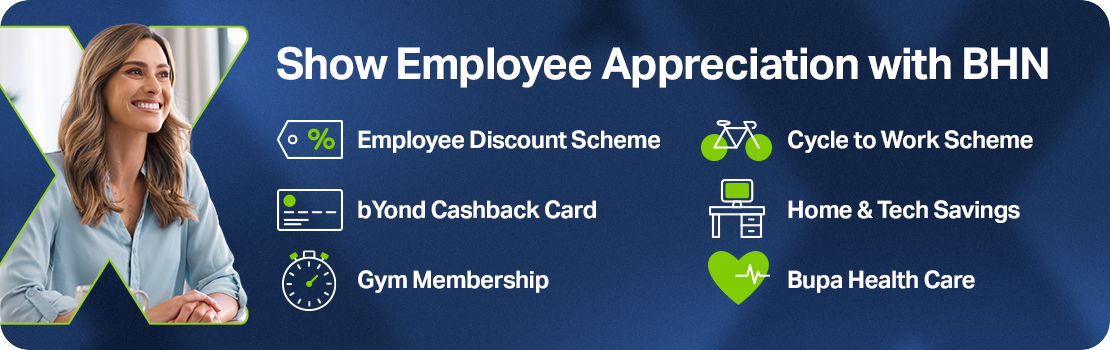
BHN Extras can support a broader culture of employee rewards by giving employees access to benefits designed to ease living costs and improve wellbeing. Through one easy-to-use platform, employees can access everyday discounts, cashback, money off gym memberships, affordable bikes and cycling equipment, home and technology savings, and even healthcare support.
Recognise more than sales and visible success
Employee reward schemes can quickly lose credibility when they only celebrate the people with the most obvious results. Sales figures, completed projects, and customer wins are easy to measure, but organisations also depend on contributions that aren’t as immediately visible: preventing problems, helping colleagues, sharing knowledge, improving inclusion, maintaining standards, and supporting customers behind the scenes.
Create several recognition and employee reward categories so different types of contributions can be seen. These might include teamwork, innovation, customer care, personal improvement, living company values, or making work easier for others.
It’s also important to avoid rewarding excessive hours or constant availability, as praising employees for working late regularly can accidentally encourage unhealthy habits. Recognise strong outcomes, smart working, collaboration, and sustainable performance instead, and make sure a healthy work-life balance isn’t compromised in the process.
Celebrate milestones without making them feel automatic
Work anniversaries, qualifications, promotions, and successful projects are natural opportunities for recognition, but the message must feel personal. A generic automated email saying “Congratulations on five years” is easy to ignore, but a note from a senior leader that mentions the employee’s contributions, growth, and impact feels far more meaningful.
Ask colleagues to contribute short messages, create a personalised card, or choose a reward around the employee’s interests. For team milestones, celebrate the people behind the result, not only the final number.

Keep employee rewards fair and transparent
Employee rewards and recognition are highly valuable for a positive workplace culture, but they can damage trust when employees believe decisions are based on favouritism. Clear criteria matter, such as:
- What types of contribution can be recognised
- Who can nominate or approve a reward
- How decisions are made
- Which rewards are available
- How often recognition takes place
Managers should receive basic training so standards remain consistent across departments. That includes knowing how to review reward data. If the same groups receive most of the recognition, ask whether everyone has equal visibility and opportunity.
It’s important to clarify that “fair” does not always mean “identical”, as different achievements generally require different rewards. Instead, fair employee rewards come from clear principles and decisions that staff can understand, and making sure everyone has an equal opportunity to be recognised for their work.
Ask your employees what meaningful rewards and recognition look like
Do not build an employee rewards and recognition strategy entirely in the HR office. Instead, ask employees what they value with pulse surveys, focus groups, or short questions during team meetings. Find out whether people prefer public or private recognition, individual or team rewards, experiences, or practical savings.
This also helps you avoid investing in rewards that look impressive but go unused. The CIPD’s 2026 Reward Survey found that 22% of UK employers had no set objectives for their employee benefits. However, among organisations with defined objectives, retaining employees and increasing motivation and engagement were the two most common aims.
Starting with a clear purpose is essential, as this will help you determine the success of your employee rewards and recognition programme. Are you trying to improve retention, encourage collaboration, support wellbeing, or reinforce company values? Whatever your aim, your rewards and success measures should align with that goal. Which leads to the final point…

Measure whether your approach to employee rewards and recognition is working
Employee rewards and recognition should feel human, but that doesn’t mean they can’t be measured. In fact, measuring them is essential to determine the success of your recognition programme.
Track participation, reward redemptions, employee feedback, and differences across teams. Add questions about feeling valued to engagement surveys and compare the answers with retention, absence, or performance trends.
In summary, it’s important that you build your employee rewards programme so that its success can be monitored and the results clearly show the desired success. That’s how you know whether it’s working, and that’s how you create a culture of reward and recognition that makes a difference.
Build a workplace culture where employee appreciation is normal
The most effective employee rewards strategy is not a monthly competition or a cupboard full of prizes. It is a workplace where people notice good work, say thank you, and reward meaningful contributions fairly.
Start small. Help managers recognise people properly, make peer appreciation easy, offer genuine choice, and listen to employees. When recognition is specific and rewards are useful, employees are more likely to feel seen, supported, and connected. That is good for motivation, good for retention, and good for your business.
If you’re ready to start building your employee rewards and recognition framework, BHN Extras is here to help employers add practical, money-saving benefits to that wider culture of support. With simple tools for HR and benefits employees can actually use, it’s one more way to turn your appreciation into something that makes a real difference for your people and your organisation.
Call us on 0208 159 9430, visit our Contact Page, or email us at enquiries@workplaceextras.com to learn more about what BHN Extras can do for your employee rewards and recognition programme.
Employee rewards and recognition FAQs
Are employee rewards taxable in the UK? +
Some employee rewards may be taxable, depending on their value and how they are provided. Employers should check HMRC rules on benefits, vouchers, and trivial benefits before launching a reward programme.
Can employee rewards include gift vouchers? +
Yes. Gift vouchers are a flexible employee rewards option because recipients can choose something they genuinely want. However, tax treatment may vary depending on the voucher and circumstances.
How often should employee rewards be given? +
There is no single rule, but employee rewards should be frequent enough to maintain momentum without becoming expected or meaningless. Smaller regular rewards can complement larger annual awards.
Can small businesses offer employee rewards affordably? +
Yes. Low-cost employee rewards can include preferred shifts, longer lunch breaks, development opportunities, handwritten notes or an early finish. Thoughtfulness often matters more than price.
Should remote employees receive different rewards? +
Remote employees should have equal access to employee rewards, although delivery may differ. Digital gift cards, home-working allowances, online experiences, and extra flexibility can work well.
Can employee rewards support workplace inclusion? +
Yes. Offering a choice of employee rewards can make schemes more inclusive. Avoid assuming everyone celebrates the same occasions, follows the same diet, or enjoys the same activities.
What is a points-based employee rewards scheme? +
A points-based scheme allows employees to earn points for achievements, behaviours, or milestones. They can then exchange those points for rewards from a pre-agreed catalogue.
Should employees be allowed to nominate colleagues for rewards? +
Employee nominations can uncover valuable work that managers may not see. Clear nomination criteria are important to reduce bias and keep the employee rewards process credible.
Can employee rewards be linked to learning? +
Yes. Courses, qualifications, conference tickets, and mentoring can be meaningful employee rewards, particularly for people who value career development and progression.
How can employers prevent reward schemes becoming competitive? +
Employers can reward collaboration, improvement, and shared success rather than only individual rankings. Team-based employee rewards and varied award categories can reduce unhealthy competition.
You might also like these articles...

How to Build a Corporate Wellness Programme for Employees
Read the article
How to Use Employee Rewards and Recognition in the Workplace
Read the article
Employee Discount Schemes: How to Boost Staff Satisfaction Without Increasing Headcount Costs
Read the article