How to improve employee mental health in the workplace

Mental health at work isn't something employers can afford to ignore. When people are under too much pressure, struggling with their workload or worried about problems outside work, it can affect how they feel, how they work and whether they want to stay.
The good news is that employers can make a meaningful difference that’s beneficial to both their staff and their organisation as a whole. Learning how to improve employee mental health doesn't mean trying to solve every problem yourself. It means creating a workplace where unnecessary pressures are tackled, managers know how to respond, support is easy to find and employees have practical benefits that can make everyday life a little easier.
Whether it’s putting an employee assistance programme in place or offering varied and supportive employee benefits such as those offered by BHN Extras, read on to learn more about how you can improve the mental health of your people.
Why employers shouldn’t ignore mental health in the workplace
Poor mental health has a very real workplace impact, and it affects far more UK employees than you might initially expect. The CIPD’s 2025 Good Work Index found that 25% of UK workers said their job had a negative impact on their mental health. Meanwhile, its Health and Wellbeing at Work research revealed that employees were absent for an average of 9.4 days over the year; the highest figure in more than 15 years, with mental ill health the leading cause of long-term absence.
Beyond this, Mental Health UK's 2025 Burnout Report provides further warning signs. One in three UK adults (34%) experienced high or extreme pressure or stress "always" or "often" during the previous year, while 21% of UK adult workers had taken time off because of poor mental health caused by pressure or stress. This can show up as absences, reduced concentration, lower morale, people leaving and teams carrying extra pressure when colleagues are struggling.

When looking at how to improve employee mental health, there is also the duty of care to consider. As per the Health and Safety Executive, employers have a legal duty to protect workers from stress at work by carrying out a risk assessment and acting on it. Work-related mental health risks should be treated like other health and safety risks: understood, managed and reduced where possible.
Support therefore needs to go further than telling employees to look after themselves. If workload, poor relationships, unclear expectations or weak management are contributing to stress, the workplace itself needs attention.
What happens when work supports mental health?
There is a strong business case for the importance of knowing how to improve employee mental health. CIPD data from 2025 found a striking difference between employees who felt work had a positive impact on their mental health and those who felt the impact was negative. Among the positive group:
- 93% were satisfied with their job, compared with 37% of those experiencing a negative impact.
- They were much less likely to say they intended to quit (14% versus 34%).
- They were also far more likely to recommend their employer (77% versus 29%).
The same research found that 69% of employees who said work positively affected their mental health were willing to work harder than they had to, compared with 39% in the negative group.
Those figures don't mean every wellbeing initiative automatically creates better performance. They do, however, show that knowing how to improve employee mental health is closely tied with better organisational outcomes and success across the board.
So, what can employers actually do? Let’s take a look.

How to improve employee mental health at work
Start with the pressures employees are actually facing
A wellbeing strategy is much more useful when it responds to real problems rather than assumptions. Look at absence patterns, employee feedback, exit interviews and recurring concerns raised with managers. Ask whether workloads are realistic, whether people have enough control over their work and whether particular teams are dealing with repeated overtime, staffing gaps or unclear priorities.
This matters, as the CIPD's 2025 research found that the key drivers of work negatively affecting mental health included poor relationships with colleagues, high workloads and line managers not helping employees perform well in their jobs. Often, improving mental health starts with changing how work is organised before adding wellbeing initiatives.
Give managers the confidence to respond well
Managers often find themselves dealing with difficult situations relating to employee mental health and wellbeing without much preparation. Giving them practical Mental Health First Aid Training (which is offered through BHN Extras’ Employee Assistance Programme) can make a big difference.
That means helping managers understand common signs of work-related stress, how to respond when someone's performance or attendance changes, what adjustments may be appropriate and when an issue needs to be escalated to HR or specialist support.
Clear guidance also protects managers from feeling like they have to solve everything themselves. Managers shouldn’t be expected to know how to improve employee mental health on their own. Their role is to notice concerns, respond appropriately and connect employees with the right support when needed.

Make it easier to talk before someone reaches breaking point
Employees should know that asking for support won't automatically be treated as a performance problem. That comes down to everyday culture. Mental health shouldn't only appear in company communications during a campaign week or after somebody has gone off sick. Regular check-ins, clear signposting and senior leaders who speak about wellbeing in a sensible, grounded way can all make conversations feel more normal.
Confidentiality is also important. Be clear about what an employee can discuss privately, what a manager may need to record and where they can go if they would rather not speak to their line manager.
Offer practical support through an Employee Assistance Programme
If you’re looking into how to improve employee mental health, an Employee Assistance Programme like the one offered through BHN Extras can give employees another route to support; particularly when they want to discuss something confidentially outside their immediate workplace.
What is an EAP?
An EAP is an employer-provided service that gives employees access to confidential support for personal or work-related concerns. Depending on the provider, that may include counselling as well as help with bereavement, relationships, financial worries, family difficulties or workplace issues.
An EAP works best when employees know it exists, understand what it covers and can find the access details easily. Mention it throughout the year rather than treating it as a benefit people are expected to remember from onboarding.
For a fuller explanation of how EAPs work, what employers should look for and how to improve take-up, read our guide to employee assistance programmes.
Use employee benefits to tackle pressures beyond the workplace
When exploring how to improve employee mental health, it’s important to note that not every pressure or struggle starts at work. Money worries, the cost of keeping active and everyday household expenses can all add strain, which is why a broader benefits package can play a useful supporting role.
BHN Extras is built around making benefits simple and useful. Employees can access savings that help with everyday costs, while employers can offer a wider mix of financial, physical and wellbeing support from one platform. That can include:
- Up to 15% cashback and discounts with selected retailers
- Cyclescheme savings of up to 47% on bikes and eligible cycling equipment
- MyGymDiscounts with savings of up to 25% on gym memberships.
- Home & Tech to help spread the cost of eligible purchases from IKEA and Currys
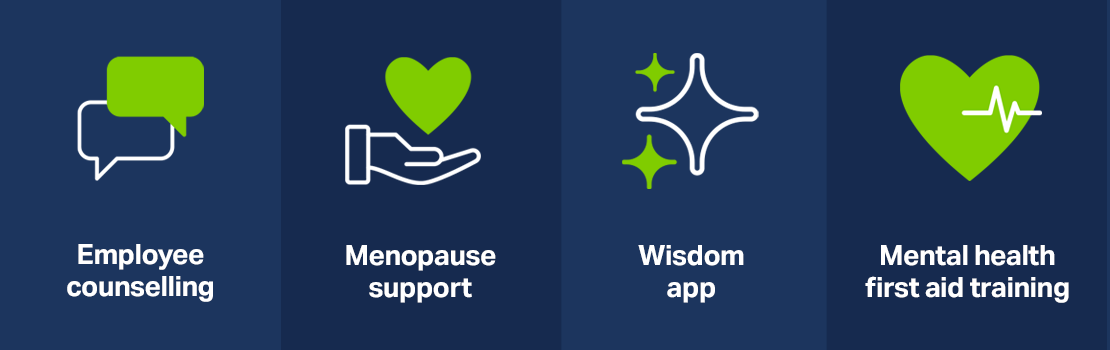
And as mentioned, this is alongside the BHN Extras Employee Assistance Programme, which gives your employees access to counselling and menopause support, as well as providing your managers with the option to undertake Mental Health First Aid Training.
See how BHN Extras can help you give employees practical support for their mental, physical and financial wellbeing without adding more admin for HR.
Build healthier boundaries into the working day
Support also needs to be visible in the way people are expected to work. If employees regularly feel they have to stay online late, respond during annual leave or absorb extra work without priorities changing, a wellbeing message will only go so far.
Look at what "normal" actually means inside your organisation. Encourage proper breaks, make workloads part of one-to-ones and give managers permission to reset priorities when teams are stretched. Flexible working can help too, where it suits the role and the employee, but it needs clear expectations so flexibility doesn't gradually become constant availability.

A healthier workplace starts with how work feels every day
There isn't one policy, platform or benefit that can answer how to improve employee mental health on its own. The strongest approach brings the pieces together. Employers need to understand workplace pressures, equip managers to respond, make specialist support easy to access and give employees practical help with some of the wider pressures affecting everyday life.
That doesn't require HR to have every answer. It does require mental health to be treated as part of how a good workplace is run rather than something addressed only when somebody is already struggling.
BHN Extras can help make that job simpler with flexible employee benefits designed to support financial, physical and mental wellbeing, as well as an Employee Assistance Programme to help you support your people.
Call 0208 159 9430, visit our Contact Page, or email enquiries@workplaceextras.com to learn more about our Employee Assistance Programme and the employee mental health benefits available on the free BHN Extras platform.
How to improve employee mental health FAQs
Can employee benefits improve mental wellbeing? +
They can support it when they address genuine employee needs. Savings, fitness benefits and financial wellbeing support can reduce some everyday pressures, but they should sit alongside healthy working practices and specialist support where needed.
How often should employers review mental health support? +
Review it at least annually and whenever workforce needs change significantly. Use employee feedback, absence trends, benefit usage and manager input to check whether support is still relevant and easy to access.
Should mental health be included in risk assessments? +
Yes. HSE says employers must assess and manage work-related stress risks. Mental health risks linked to workload, relationships, role clarity, support and organisational change should therefore be considered.
How does an employee assistance programme support mental health? +
An employee assistance programme gives employees confidential access to support outside their immediate management team. Depending on the provider, this can include counselling and help with personal or work-related concerns.
Should managers ask employees about their mental health? +
Managers can ask open, supportive questions about wellbeing, particularly when they notice a change. They should avoid diagnosing a problem and focus instead on listening, workplace adjustments and signposting.
Can financial wellbeing affect employee mental health? +
Yes. Financial worries can contribute to stress and distraction. Benefits that reduce everyday costs won't solve every money problem, but they can form part of a broader financial wellbeing strategy.
Is an employee assistance programme confidential? +
EAP services are generally designed to be confidential, although exact arrangements vary between providers. Employers should clearly explain what information remains private and whether any anonymised usage data is reported back.
How can employers measure whether mental health support is working? +
Look beyond EAP usage alone. Absence, turnover, employee survey results, manager confidence and awareness of available support can provide a more rounded view of progress.
What are reasonable adjustments for mental health? +
They depend on the individual and the role. Examples can include adjusted hours, changes to workload, quieter working arrangements or extra support from a manager, where reasonable and appropriate.
How does an EAP benefit your workplace in regards to mental health? +
An EAP gives employees a confidential route to support when they’re struggling, which can make it easier to seek help early. It can also give managers somewhere appropriate to signpost employees without expecting them to provide specialist support themselves.
You might also like these articles...

How to talk about mental health at work with your employer
Read the article
How to improve employee mental health in the workplace
Read the article
Halfords joins Cyclescheme as a retailer: more choice, more convenience, more reasons to ride
Read the article