How Does a Tech Scheme Work? Everything You Need to Know About Tech Salary Sacrifice

Technology plays a part in almost every area of modern life. Employees use it to work, manage their money, stay connected, and keep their households running. The problem is that replacing a broken laptop, phone, or washing machine can put real pressure on an already stretched budget.
A workplace tech scheme offers a simpler way to manage these costs. Instead of paying the full price upfront or relying on traditional credit, eligible employees can access technology and other approved products through their employer. The cost is then deducted from their salary over an agreed period.
So, how does a tech scheme work, what does salary sacrifice actually mean, and where do the savings come from? Here’s everything employers and employees need to know.
What is a tech scheme?
A salary sacrifice tech scheme is an employee benefit that helps staff access technology through their workplace. Depending on the provider, this could include:
- Laptops and tablets
- Smartphones and smartwatches
- Televisions and audio equipment
- Gaming devices
- Printers and home office equipment
- Kitchen appliances and white goods
- Furniture and other home essentials
Rather than paying for everything in one go, an employee chooses an eligible product and agrees to regular deductions from their salary, allowing them to gradually pay over time with affordable instalments. Schemes like this are described as tech salary sacrifice schemes because the employee gives up part of their salary in exchange for a benefit.
HMRC defines salary sacrifice as an agreement to reduce an employee’s entitlement to cash pay, usually in return for a non-cash benefit. The arrangement often requires a change to the employee’s contractual terms, which the employee must agree to.
In short, the employee gets access to the products they need, while the cost is spread across manageable salary deductions. It’s as simple as that, and the clear benefits are why 77% of organisations are currently offering salary sacrifice schemes to their employees across various industries and sectors.
How does a tech scheme work?

Although each provider may have a slightly different process, most workplace tech schemes follow a few straightforward steps.
1. The employer introduces the scheme
First, the employer chooses a tech scheme provider, such as the BHN Extras Home & Tech scheme, makes the benefit available to eligible employees, and sets rules such as:
- Who can apply
- The minimum and maximum order value
- Which products are available
- How often employees can place an order
- The length of the repayment period
- What happens if someone leaves their job
A well-run scheme should also give HR and payroll teams clear guidance, reporting tools, and support.
2. The employee selects their products
During an agreed application window, the employee visits the tech scheme’s online platform and chooses from the available technology or home products.
The choice depends on the scheme provider and its retail partners. Some schemes focus exclusively on personal technology, while others include furniture, household appliances, and home office equipment too.
3. The employer approves the application
The employer checks that the employee meets its tech scheme eligibility rules, and that the proposed deductions will not reduce their cash pay below the relevant National Minimum Wage or National Living Wage rate.
This is important because salary sacrifice arrangements cannot reduce an employee’s cash earnings below the applicable minimum wage. Employers must have suitable payroll controls in place before approving an order.
4. The employee receives their products
Once the order has been approved, the employee receives the products or the means to purchase them from the tech scheme’s retail partner.
The exact fulfilment process varies. For example, employees may receive a digital voucher, redemption code, or direct delivery.
5. Deductions are made through payroll
The employee’s contractual salary is reduced by an agreed amount over the scheme period. Tech schemes, like the Home & Tech scheme offered by BHN Extras, commonly spread the cost over 12 months, although the terms depend on the employer and provider.
The deduction appears on the employee’s payslip, so there is no separate monthly bill to remember.

Is a tech scheme the same as buying through finance?
A tech scheme differs from retail finance because employees access it through a workplace benefit and repay the cost through payroll. Depending on the scheme, employees may benefit from:
- No upfront payment
- No interest on their repayments
- No traditional consumer credit application
- Automatic deductions through payroll
- Access to workplace-only discounts
- National Insurance savings
However, employees should still treat the commitment seriously. Salary deductions reduce take-home pay for the agreed period, so each person should check that the monthly amount remains affordable.
A tech scheme is designed to maximise employee purchasing power, not encourage unnecessary spending.
What are the tax advantages of a tech salary sacrifice scheme?
This is where tech salary sacrifice is often misunderstood. Salary sacrifice does not automatically mean that an employee avoids both Income Tax and National Insurance on every benefit.
Since April 2017, Optional Remuneration Arrangement rules have removed many of the previous tax advantages available when benefits are exchanged for salary. Under these rules, the taxable value is generally based on the higher of the salary given up, or the normal taxable value of the benefit.
However, employees may still make a saving with a typical home and technology scheme because they do not pay employee National Insurance on the sacrificed salary, even if the sacrificed amount is usually still subject to Income Tax.
That means the saving will depend on factors including:
- The employee’s earnings
- Their National Insurance position
- The value of the order
- The scheme’s structure
- Any retailer discount included
- Current tax and National Insurance rules
Employees should therefore check a personalised illustration rather than assuming every salary sacrifice benefit produces the same saving.
Employers should also obtain appropriate payroll or tax advice when setting up a scheme. Clear, accurate communication protects the business and helps employees understand exactly what they are agreeing to. That way, everyone saves what they expect to, and the salary sacrifice tech scheme is beneficial to all.
How does BHN Extras Home & Tech salary sacrifice scheme work?

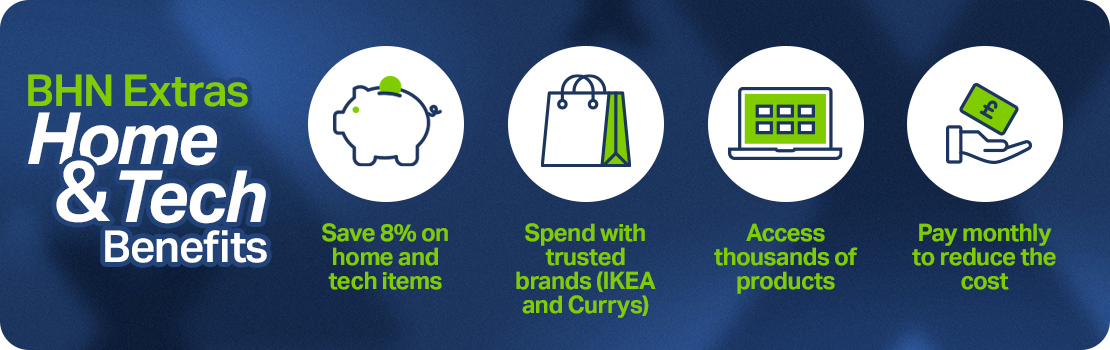
The BHN Extras Home & Tech scheme is a great example of how a tech salary sacrifice benefit can provide real value. The scheme gives employees access to thousands of home and technology products from trusted brands IKEA and Currys. Employees can save up to 8% and spread the cost interest-free through salary deductions, with no upfront payment.
Available purchases can cover far more than the latest gadgets too. Employees might use the scheme to:
- Replace an essential fridge
- Upgrade a home office
- Buy a new bed
- Purchase the technology their household needs
That means smarter savings and less pressure from large one-off expenses for employees. It’s also a useful benefit for employers, as it supports a wide range of people and a wide range of home and technology related products, rather than a small group with one shared interest.
Why are tech schemes valuable for employees?
The strongest employee benefits solve real problems. Tech schemes like the BHN Extras Home & Tech scheme do exactly that by helping employees manage purchases that might otherwise disrupt their household budget. And with the ever-rising cost of living, it’s why home and tech benefits matter more than ever.
Large costs become more manageable
An essential appliance can stop working without warning. A laptop may need replacing just as several other bills arrive. Spreading the cost can make these purchases easier to absorb, as employees know what will be deducted each month and do not need to find the full amount immediately.
Employees can avoid interest charges
Where the scheme offers interest-free deductions, the employee does not pay borrowing interest simply for spreading the cost. That can offer a more straightforward alternative to credit cards, overdrafts, or high-cost finance, provided the employee can comfortably afford the salary reduction.
There may be no traditional credit check
Some tech schemes do not rely on credit checks, including the scheme offered by BHN Extras. This can make essential products more accessible to employees who have a limited credit history or who prefer not to use additional borrowing. Eligibility is still subject to the employer’s rules, affordability checks, and minimum wage requirements.
The benefit supports everyday life
Technology is not just a luxury. A reliable laptop can support professional development, a smartphone keeps families connected, and home appliances are essential to day-to-day living. A broad tech scheme gives employees the flexibility to choose what would make the biggest difference to them.
Why should employers offer a tech scheme?
A tech scheme is not simply a shopping benefit. It can strengthen an employer’s wider approach to financial wellbeing and employee support.
It helps ease financial pressure
Employers cannot control the cost of every household purchase. They can, however, offer tools that make those costs easier to manage. Helping employees spread essential expenses can reduce the immediate pressure created by a broken appliance or necessary technology upgrade.
It offers something for a broad workforce
Almost everyone uses technology or household equipment, and that’s what makes a Home & Tech scheme a highly inclusive addition to a flexible benefits package. Employees choose whether to participate and select products that suit their own circumstances.

It can support attraction and retention
Recent research shows that 75% of employees are more likely to stay with an employer that offers a strong benefits package. Practical benefits show candidates and existing employees that the business understands the pressures people face outside work, and meaningful benefits such as a Home & Tech salary sacrifice scheme add everyday value to the overall employee experience.
It can be simple to manage
The right provider should remove unnecessary admin rather than create more of it. Digital applications, clear approval processes, payroll reporting, and employee communications all help HR make the benefit easy to use. With BHN Extras, Home & Tech is free for businesses to offer and designed to be cost-neutral to run. That means fewer headaches for HR alongside real savings for employees.
Make tech salary sacrifice easy with BHN Extras
So, how do tech schemes work with salary sacrifice? They turn a large upfront purchase into manageable deductions through an employer-run benefit. The employee chooses approved products, the employer approves the application, and the cost is taken through payroll over an agreed period.
Done properly, a tech scheme is clear, useful, and easy to access. It can help employees avoid sudden financial shocks, spread costs without interest, and save money through available discounts and National Insurance reductions.
BHN Extras makes benefits easier for everyone. Employees get practical support that can ease living costs, while employers get a simple and easy-to-manage platform backed by people who know benefits inside out.
With trusted brands including IKEA and Currys, the BHN Extras Home & Tech scheme helps businesses offer a benefit their employees can use in ways that genuinely help them make their money go further.
To learn more, call BHN Extras on 0208 159 9430, visit our Contact Page, or email us at enquiries@workplaceextras.com. Sign up for free, and get started with employee benefits that deliver real savings and make a genuine impact.
FAQs: How does a tech scheme work?
Can employees use a tech scheme while working remotely? +
Yes. A tech scheme can help remote and hybrid employees access items such as monitors, printers, desks, or personal laptops. Employers should clarify whether products are personal benefits or equipment supplied specifically for work.
How does a tech scheme work during maternity leave? +
Deductions may be affected if an employee moves onto reduced pay or Statutory Maternity Pay. Employers should set out how repayments, pauses, or alternative arrangements will be handled before the employee joins.
Can part-time employees join a tech salary sacrifice scheme? +
They may be eligible, but the deduction must not reduce their cash earnings below the applicable minimum wage. Lower monthly earnings can therefore affect the order value available to a part-time employee.
Can an employee make more than one tech scheme order? +
This depends on the employer’s policy. Some businesses operate fixed annual windows, while others permit applications more frequently. Employers may also set a total yearly or per-order spending limit.
What happens if a tech scheme product develops a fault? +
The employee should follow the retailer or manufacturer’s repair and warranty process. Scheme communications should explain who to contact, as payroll teams will not usually be responsible for diagnosing or repairing products.
Can employees return items bought through a tech scheme? +
Returns depend on the retailer’s terms and the status of the salary sacrifice agreement. Employees should not assume that cancelling or returning an order will automatically stop payroll deductions immediately.
How does a tech scheme work for employees with fluctuating pay? +
Variable hours, commission, or unpaid leave can affect affordability and minimum wage checks. Employers may need additional controls before approving applications from employees whose cash earnings change significantly each month.
Can employers restrict which technology employees purchase? +
Yes. Employers can limit the available retailers, product categories, order values, or application periods. Clear restrictions help keep the scheme manageable and prevent confusion during approval.
Does a tech scheme affect an employee’s credit score? +
A scheme without a traditional consumer credit agreement may not involve a standard credit search. Employees should still check the provider’s terms, as the precise application and eligibility process can vary.
Can directors use a workplace tech scheme? +
Directors who are employees may be able to participate, subject to the scheme rules, payroll structure, and minimum wage position. The company should obtain tax advice where a director’s remuneration arrangements are unusual.
You might also like these articles...

How to Build a Corporate Wellness Programme for Employees
Read the article
How to Use Employee Rewards and Recognition in the Workplace
Read the article
Employee Discount Schemes: How to Boost Staff Satisfaction Without Increasing Headcount Costs
Read the article