Encouraging Physical Wellbeing in the Workplace: The Benefits of Offering Employee Gym Memberships

Physical wellbeing affects how employees feel and perform throughout the working day. When people are dealing with low energy, poor sleep, pain, or ongoing health problems, it can influence all aspects of their workplace performance. That includes attendance, concentration, and morale. This is why physical wellbeing is a business issue as much as a personal one.
From office staff to more physically demanding roles, there are a range of factors that can make exercise and prioritising physical wellbeing challenging outside of working hours. And while employers cannot control every aspect of an employee’s health, they can remove some of the barriers that make it harder for people to stay active. Discounted gym access is one practical way to do that.
The benefits of offering employee gym memberships can include more affordable access to exercise, stronger wellbeing support, and a more attractive benefits package for your people. It can also contribute to wider goals for employers, including those related to engagement, performance, attendance, and retention. This makes benefits related to health and exercise a win for everybody. Let’s take a deeper look.
Why physical wellbeing in the workplace matters
Poor physical health can affect employees even when they are still attending work. Ongoing health issues or generally poor health can reduce comfort and concentration, and this doesn’t just lead to higher absenteeism. It also creates presenteeism: employees being present but unable to perform fully because of health issues. In short, poor physical wellbeing leads to employees being unable to properly fulfil their roles.
On the other hand, investing in the physical wellbeing of your employees has a proven positive impact on both your people and your business. When it comes to organisations that invested in employee wellbeing in 2025, the CIPD’s 2025 health and wellbeing at work report found that:
- 39% of organisations reported higher engagement
- 39% reported lower sickness related absences
- 38% reported enhanced employee performance
Of course, the benefits of offering employee gym memberships and discounts will not counter or fix unsafe working practices, excessive workloads, or poor management. Those problems need direct action. However, affordable fitness access can support a broader wellbeing strategy by making it easier for employees to build movement and a greater focus on physical health into their lives.

What are the benefits of offering employee gym memberships?
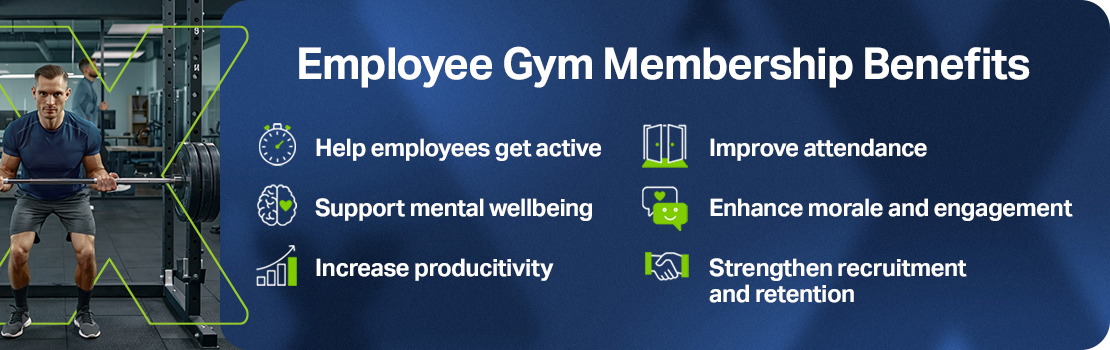
The main benefits of offering employee gym memberships include making exercise more affordable, supporting physical and mental wellbeing, improving the employee benefits package, and helping employers strengthen engagement, attendance, recruitment and retention.
Helping employees become more active
Membership costs can be a barrier, especially when employees are balancing household bills and other essential spending. Location can also limit take-up. That’s why a discounted membership at one gym near the office may not suit remote workers, shift workers, or employees who prefer to exercise closer to home.
A broad gym discount benefit gives people more choice. Employees can look for a facility, class, or routine that suits their budget, location, confidence, and fitness level. Depending on the person, wellbeing could mean swimming, yoga, strength training, low-impact exercise, or simply moving more consistently, so it’s important to cater to these differences.
Supporting mental wellbeing and stress management
Physical and mental wellbeing are closely connected. Exercise can give employees time away from screens and the general pressures of daily life. It can also create routine, social contact, and a sense of progress outside work. Recent research found that:
- 72% of surveyed adults with a mental health condition said being physically active had helped them stay well and made them less likely to be off work.
- However, only 16% felt able to meet the recommended level of 150 minutes of physical activity each week.
- More than three in five, or 61%, said they would be likely to join a gym, fitness facility, or leisure centre if it were offered as an employee benefit or at a discounted rate.
This shows that the benefits of offering employee gym memberships go beyond the physical. Gym access cannot entirely replace mental health support, but it can give employees another voluntary wellbeing option that makes a genuine difference.
Supporting productivity and performance
Pain, fatigue, and poor sleep can all affect concentration, making it harder for employees to work at their usual pace. Meanwhile, the CIPD’s 2025 research found that 90% of organisations associated investment in employee wellbeing with positive opportunities.
Providing a gym discount may not always automatically create a more productive workforce, but it can contribute to the conditions that help employees feel healthier, more focused, and better supported.
Supporting attendance and preventative wellbeing
Gym and fitness benefits can support a more preventative approach, as employees do not need to report a health concern or wait until they are unwell before using them. This helps make physical wellbeing part of everyday working life rather than something discussed only during a crisis or an annual awareness campaign.
Employers still need to manage workplace risks properly. Safe working practices, suitable equipment, reasonable workloads, and access to occupational health cannot be replaced by lifestyle benefits. The strongest approach combines organisational responsibility with practical employee choice, and fitness-related benefits play a significant role.
Improving morale and engagement
A physical wellbeing benefit such as a gym membership can demonstrate that the company recognises employees as people with needs beyond their immediate output. When a perk is affordable, flexible, and easy to use, it can feel more valuable than a benefit that looks generous but is difficult to access.
Employees should never be pressured to use it. The value comes from offering a useful choice, not setting expectations about appearance, fitness, or how people spend their free time.
Strengthening recruitment and retention
Salary, progression, management, and culture remain essential in the workplace. Relevant benefits like gym memberships and discounts can support recruitment, as they help to distinguish an employer and make them more attractive to potential candidates.
Wellbeing benefits also help with retention. Recent research shows that 82% of employees whose health benefits met their needs intended to stay with their employer. This is proof that employers who openly value their employees’ health are more likely to have staff stay with them long term. This is just another example of the benefits of offering employee gym memberships and similar perks.
How to get more value from employee gym membership benefits

Offer genuine choice
Employees have different goals, schedules, confidence levels, and fitness levels. A useful gym membership benefit should include a variety of locations and activities rather than assuming everyone wants the same gym experience.
A broad network can support office-based, hybrid, remote, and shift-working employees across different facilities and activities.
Keep the process simple
A benefit loses value when employees face long forms, unclear rules, repeated payroll approvals, and admin that makes a benefit more hassle that it’s worth.
Explain who can use the gym benefits you offer, how much employees can save, and how they can join. The easier the process feels, the more likely people are to take up the offer.
Communicate it throughout the year
Include your gym benefit in onboarding, regular benefits reminders, and wellbeing communications. Employees’ circumstances change, so someone who is not interested in January may want to use it later in the year.
Also make sure you keep the language inclusive. Focus on movement, wellbeing, enjoyment, and choice rather than specific or unrealistic fitness goals. The broader the appeal of a gym membership benefit, the more people will partake.
Offer employee gym membership discounts with MyGymDiscounts
Now that we’ve covered the benefits of offering employee gym memberships in the workplace, let’s look at how you can put those benefits into practice.
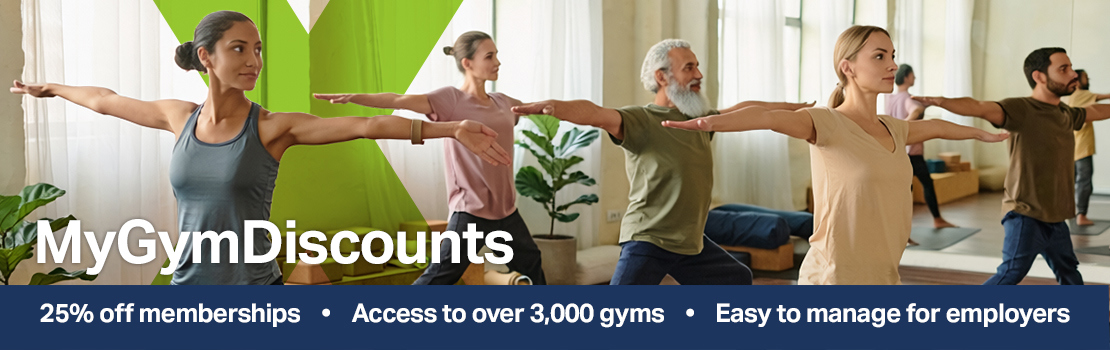
MyGymDiscounts from BHN Extras gives employees up to 25% off memberships across more than 3,000 gyms, leisure centres, health clubs, fitness studios, and bootcamp classes throughout the UK. That means it’s suitable for both new and existing gym users, helping employees find an option that works around their location, routine, and preferred way to exercise.
This flexibility supports varied workforces, whether employees prefer a gym near work, a leisure centre close to home, swimming, studio classes, or bootcamp training. The inclusivity means employees get choice, which means more of your people are more likely to find it worthwhile and partake.
MyGymDiscounts is also a simple benefit that’s easy for HR teams to manage, as it does not require payroll approvals. This reduces the administrative work involved in running the benefit, as there is no need to process individual salary deductions or manage a complicated monthly scheme.
Better yet, it can sit alongside the other BHN Extras benefits on our free-to-join and easy-to-use platform, with benefits that cover everyday shopping, cycling, home essentials, technology, healthcare, and more.
Build a healthier workplace with gym benefits
All in all, physical wellbeing affects whether employees feel able to work comfortably, stay focused, and bring consistent energy to their role. Employers cannot prevent every health challenge, but they can create safer working environments and offer practical wellbeing tools.
The benefits of offering employee gym memberships include more affordable access to activity, greater employee choice, and a stronger overall wellbeing package. They can also support wider priorities around morale, engagement, performance, attraction, and retention.
With MyGymDiscounts, employees can save up to 25% at more than 3,000 fitness locations and options across the UK, with no payroll approvals or complicated administration for HR.
Simple support, more choice, and everyday savings made easy.
Join BHN Extras for free and make physical wellbeing easier for your employees.
The benefits of offering employee gym memberships FAQs
Are employee gym membership discounts a taxable benefit? +
The tax treatment can depend on how the benefit is provided and paid for. Employers should check the specific arrangement with their payroll adviser, accountant, or HMRC rather than assuming every gym benefit is treated identically.
Can employees use a gym discount if they already have a membership? +
Some schemes allow existing members to access discounted rates, but the process can vary between providers and venues. Employees should check whether they need to change membership type or wait until renewal.
Should employers survey staff before introducing a gym membership benefit? +
A short benefits survey can reveal preferred locations, activities, and barriers to participation. It can also help HR assess likely demand before choosing a provider or planning the launch campaign.
Can gym membership benefits help remote employees feel included? +
They can provide remote workers with a benefit they can use locally, without travelling to an office. A nationwide network, such as the discounted gym memberships offered by BHN Extras with MyGymDiscounts, is generally more inclusive than a workplace gym available only at one site.
How can employers make gym membership benefits accessible? +
Employers can encourage employees to ask venues about step-free entry, accessible changing rooms, adapted equipment, and specialist sessions. Accessibility can differ considerably between individual locations.
How can employers protect employee privacy when promoting fitness? +
Participation should remain voluntary, and employees should not be asked to share weight, health conditions, or exercise records. HR generally needs only overall take-up information rather than personal fitness data.
Are gym discounts suitable for employees approaching retirement? +
Yes. Many older employees value low-impact activities, swimming, strength training, or mobility-focused classes. Choice is important because employees’ abilities, experience, and health needs vary.
Can employers combine gym discounts with team fitness challenges? +
They can, but challenges should be optional and inclusive. Consider rewarding participation or consistency rather than speed, distance, weight loss, or physical performance, which may disadvantage some employees.
When is the best time to launch an employee gym benefit? +
January can attract attention, but launches can work at any time. Linking the benefit to onboarding, a wider benefits refresh, or a wellbeing campaign may create more lasting engagement.
What should HR do when employee uptake for a gym benefit is initially low? +
Review whether employees understand the savings, available locations, and joining process. Low early take-up may reflect weak communication or poor timing rather than a lack of interest in physical wellbeing.
You might also like these articles...

How to Build a Corporate Wellness Programme for Employees
Read the article
How to Use Employee Rewards and Recognition in the Workplace
Read the article
Employee Discount Schemes: How to Boost Staff Satisfaction Without Increasing Headcount Costs
Read the article