

How to Build Team Morale: A Remote Team Building Guide

Remote working is more popular than ever among employees, offering more flexibility and control over working schedules, as well as freedom from daily commuting. However, when staff don’t share the same physical workspace, it’s important for employers to make sure they’re taking the necessary steps to keep team morale strong.
Without office chats and water cooler catch-ups that help relationships grow, remote employees can sometimes feel disconnected from colleagues and less visible to managers. Communication can become purely task-based, and this makes recognition easier to miss.
Recent workplace data shows that only 10% of UK employees are actually engaged at work. Of course there are a wide range of elements that can result in low engagement, but this clearly highlights a need to boost morale, especially when it comes to remote team building.
Fortunately, building team morale remotely doesn’t require endless video calls or forced fun, which can often have the opposite effect. Instead, it comes from creating an environment where people feel recognised, trusted, supported, and connected even as they work apart.
What does team morale look like in a remote workplace?
Team morale is the shared sense of enthusiasm and connection people feel towards their work and their colleagues, as well as the organisation they work for. This is just as important in remote teams as any other workplace.
Good morale for remote staff will include employees who speak openly, help each other, contribute ideas, and feel comfortable asking for support. They understand what they’re working towards and they know their contribution matters. However, low team morale can be less obvious remotely than in a physical workplace. Someone may still meet deadlines while becoming increasingly disengaged, and team chats can become quieter with communication limited to meetings and updates.
This is why remote team building needs to go beyond organising the occasional online social. It should be built into how your people communicate and collaborate, and it should be part of their work experience every day.
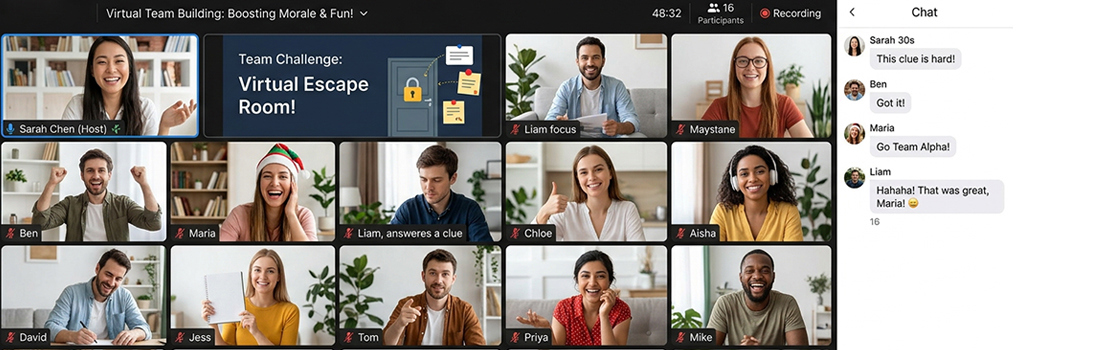
Step 1: Give remote teams clear and consistent communication
Good morale among remote teams starts with good communication. However, it’s important to remember that good remote communication isn’t just about sending more messages, but about making communication consistent and useful.
Start by agreeing how your team uses different channels, with clarity around questions such as:
- What belongs in emails?
- What needs an instant message?
- When is a video call necessary?
- Which updates should be shared with everyone?
Clear expectations around communication reduce uncertainty and help prevent people from feeling like they need to be permanently online. This removes an area of stress that can be especially prevalent for remote workers, and it’s one less obstacle to impede strong team morale.
Managers should also make room for one-to-one conversations to help their people feel more connected and recognised. That means frequent, meaningful talks covering progress, workload, wellbeing, and development rather than focusing solely on getting work done.
Step 2: Make recognition visible even from afar
In an office, appreciation often happens naturally. After all, it’s easy to say thank you across a desk or notice when a colleague has gone the extra mile in person. These moments aren’t as instantly visible to remote workers, however, which means they can go unnoticed.
Achievers' 2025 State of Recognition Report found that employees who are recognised weekly are:
- Three times more likely to feel engaged
- Nine times more likely to feel a sense of belonging

This is why making recognition deliberate is so vital for team morale and remote team building. Don’t forget to celebrate good work in team channels, mention individual contributions during meetings, and encourage colleagues to recognise each other rather than leaving all the praise to managers.
Remember, recognition doesn’t need to be reserved for major milestones. Acknowledging effort can strengthen team morale by helping people feel seen even when they’re working miles apart.
Step 3: Build connection without forcing it
Remote team building works best when it creates genuine opportunities for connection, rather than forcefully adding another obligation to employees’ calendars. Examples of remote connection-building to boost morale can include:
- Optional virtual coffee chats
- Informal team channels for conversations unrelated to work
- Occasional in-person meet-ups when they’re practical
- Online games and quizzes
You could also introduce rotating buddy conversations so colleagues who don’t usually work together can get to know each other better.
The important word here is optional. Not everybody wants a virtual social after a full day of video calls. And while some employees will love a team quiz, others may value a relaxed 15-minute coffee chat where they don’t have to use their brains quite so much. Offering different ways to connect makes remote team building more inclusive without turning socialising into another programme employees have to attend.
Step 4: Trust people instead of monitoring activity
Few things damage team morale faster than feeling watched. In fact, nearly half of employees (43%) say their company morale is negatively impacted by internet surveillance and online monitoring. Why? Because it shows a lack of trust.
Remote workers shouldn’t have to prove they’re constantly working, whether by keeping a status light permanently green or instantly replying to every message that comes their way. Focus on outcomes, agreed priorities, and quality instead.
That means giving people appropriate autonomy over how they organise their working day. Set clear expectations around availability and responsibilities, then give people room to deliver. The key is in the word deliver. If an employee is hitting their deadlines and meeting all their responsibilities, there should be no reason for excessive monitoring or a lack of trust.
Employees should also feel comfortable flagging problems, which includes admitting when workloads are becoming difficult and asking for help. These issues arise in any workplace, and staff should be able to bring them up without worrying that working remotely makes them appear less committed.

Step 5: Protect remote employees from always-on working
When home is also the workplace, switching off and separating work from personal life can be difficult. That’s why managers can support remote team morale by making healthy boundaries part of the culture. That means:
- Avoiding creating expectations around evening replies
- Encouraging proper breaks and appropriate log-off times
- Being realistic about workloads within reasonable working hours
Leaders need to model those habits too. Telling employees to disconnect has limited impact if their manager regularly sends non-urgent messages late at night.
Ultimately, remote team building isn’t only about bringing people together, but also about creating an environment where people can do good work without that work gradually taking over their home lives.
Step 6: Support team morale with benefits people can actually use
Remote employees may work away from the office, but they have the same variety of needs and pressures that in-person staff do. This is where a useful benefits package can add another layer of practical support for remote staff, and improve team morale by making them feel cared for and valued. This is reinforced by the fact that over two fifths (41%) of employees consider a good benefits package to matter most when it comes to an employer.
Relevance and choice are the main factors to consider. Like all workforces, remote teams are far from identical, so one specific company perk won’t work for everyone. Giving employees access to different benefits means people can choose support that fits their circumstances and lifestyles.
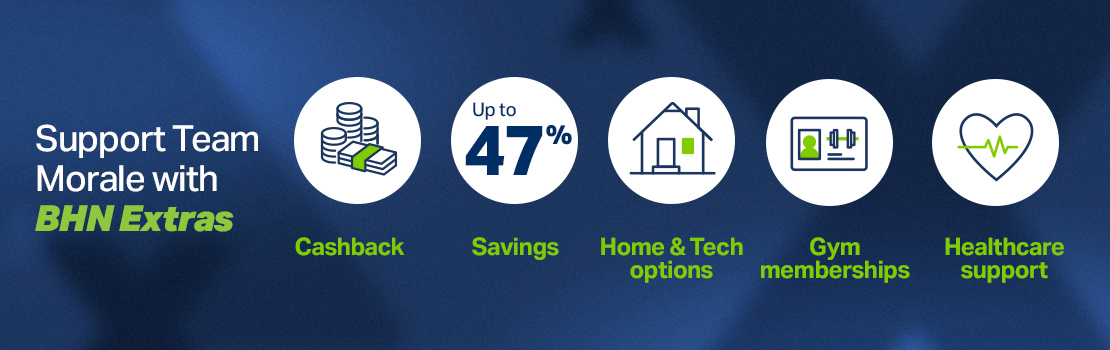
BHN Extras is here to make that simple. Employees can access money-saving benefits through one free and easy-to-use platform, including:
- Up to 15% cashback and discounts with a range of retailers
- Savings of up to 47% on bikes and cycling gear through Cyclescheme
- Home & Tech options with trusted household brands and savings of up to 8%
- Up to 25% savings on gym memberships through MyGymDiscounts
- Healthcare support with Bupa private medical insurance and dental insurance
Salary sacrifice benefits such as Cyclescheme and Home & Tech can be especially useful to employees and employers alike. Not only do they help employees afford purchases they might otherwise struggle with through more manageable monthly payments, but they can even end up being cost-positive for employers too.
Alongside this variety, these benefits are low admin and simple for HR to manage. That means you can boost team morale amongst your remote employees with BHN Extras without burdening your staff with excessive benefits management.
Step 7: Make development part of remote team building
People want to feel like they’re growing in their careers, and that’s no less true for remote employees as in-office workers. However, remote employees can sometimes worry that being away from the office means fewer opportunities to learn or progress. Managers can counter that by making development visible and accessible to everyone, which includes:
- Discussing career goals during one-to-ones
- Offering mentoring and training to those who want it
- Sharing opportunities openly rather than just with those in the room at the time
You can also make development part of remote team building. Short knowledge-sharing sessions and skill swap meetings can help colleagues learn from each other while strengthening collaboration.
Step 8: Ask employees what would improve team morale

Finally, you don’t need to guess what your remote workers need. You can just ask them.
Whether it’s through pulse surveys, one-to-ones, or team discussions, you can uncover morale-affecting problems that aren’t immediately visible with open communication. Employees might want clearer priorities, fewer meetings, better recognition, more development opportunities, or stronger communication between departments. But if you don’t ask, you may never know.
More importantly, show people what happens after you’ve asked them how you can improve morale. Share what you heard, explain what you can change and what you can’t, and make sure you follow through. That shows employees they have a genuine voice in how the remote working experience develops, which in turn will increase morale and help them feel more connected to your organisation.
Build a better remote employee experience and improve team morale with BHN Extras
Overall, there’s no single remote team building activity that creates lasting morale. Strong remote teams are built through many small experiences, such as a manager who listens, a colleague who says thank you, a clear update at the right time, a manageable workload, and of course, support that makes everyday life easier.
BHN Extras helps you offer that support to your remote staff by bringing useful workplace benefits together, and making them easy to access for employees whilst being simple to manage for HR. Better yet, our benefits revolve around trusted brands that employees already know, and around savings they can actually use.
Real savings. Zero hassle. Benefits that work for everyone.
Ready to give your remote teams more everyday support? Call BHN Extras on 0208 159 9430, visit our Contact Page, or email us at enquiries@workplaceextras.com, and make benefits simple for your people and your HR team.
Team morale and remote team building FAQs
How can you measure team morale in a remote team? +
Combine short anonymous pulse surveys with indicators such as voluntary turnover, absence, meeting participation, and employee feedback. Look for trends over time rather than relying on one score.
How often should remote team building activities happen? +
There’s no perfect frequency. Small, low-pressure activities every few weeks can work better than large compulsory events. Ask employees what they enjoy and adjust accordingly.
Can onboarding affect team morale for remote workers? +
Yes. Remote employees can feel isolated quickly without clear introductions and support. A structured onboarding plan, assigned buddy, and regular early check-ins can help new starters build relationships sooner.
How do you include introverts in remote team building? +
Offer different formats. Smaller group chats, asynchronous activities, and optional one-to-one conversations can give quieter employees ways to connect without requiring large-group video calls.
Can remote team building work across different time zones? +
Yes. Rotate live activities so the same employees aren’t always inconvenienced and use asynchronous activities people can join during their own working hours.
Do fully remote and hybrid teams need different morale strategies? +
Sometimes. Fully remote employees have fewer physical touchpoints, while hybrid teams can face proximity bias. Both need equal access to information, recognition, support, and opportunities.
What is proximity bias in a remote team? +
Proximity bias happens when employees who are physically closer to managers receive more attention or opportunities. Clear progression criteria and documented decisions can help to reduce this.
Can team morale fall during particularly busy periods? +
Yes. High workloads can make communication more transactional. Managers can help by reviewing priorities, recognising extra effort, and postponing lower-priority work rather than simply adding more social activities.
How can remote teams celebrate employee milestones? +
Try digital cards, peer messages, small rewards, mailed gifts, or a short optional celebration call. Match the recognition to the employee rather than assuming everyone wants public attention.
Who is responsible for team morale in a remote workplace? +
It’s shared. Leaders shape culture, HR provides systems and support, managers influence the everyday employee experience, and colleagues contribute through communication, collaboration, and recognition.
You might also like these articles...

Staff Recognition Ideas: Examples of Non-Financial Rewards for Employees
Read the article
What are Fringe Benefits and How Can Employees Take Advantage?
Read the article
How to Build Team Morale: A Remote Team Building Guide
Read the article